Tag: Business

  • Why I’m Starting a 5AM Club

    Why I’m Starting a 5AM Club

    I’ve been thinking a lot about how loud life feels right now.

    Every day, there is something new to take in. The news is heavy. People are being laid off. AI is changing the way we work. Prices keep rising. Careers feel less predictable. And in the middle of all of that, we still have lives to live, people to love, bills to pay, bodies to care for, and dreams we’re trying not to give up on.

    It’s a lot.

    That’s why I’m starting a 5AM Club.

    Not because waking up at 5AM makes you better than anyone else. Not because I think everyone needs to become a strict morning person. And definitely not because I want another space where people feel like they aren’t doing enough.

    I’m starting it because I think a lot of us are craving a little more rhythm. A little more focus. A little more peace. A little more accountability that feels supportive, not stressful.

    The idea of a 5AM Club is not new. Long before it had a name, people used the early morning as a time for prayer, movement, writing, study, planning, and reflection. Spiritual communities, athletes, writers, entrepreneurs, and everyday people have all used the quiet of the morning to prepare themselves for the day ahead.

    The phrase “5AM Club” became more widely known through leadership and personal development author Robin Sharma, who popularized the idea of waking up early and using the first part of the day with intention. Over time, people began creating their own versions of 5AM clubs for fitness, prayer, studying, entrepreneurship, wellness, and accountability.

    That history matters to me because I do not see this as just a productivity trend. At its best, a 5AM Club is about choosing how you begin before the world starts choosing for you.

    For me, the morning has a certain kind of honesty to it. Before the phone starts ringing, before the emails come in, before the meetings, the errands, the responsibilities, and the noise of the world — there is a small window where you can hear yourself.

    That small window matters.

    A 5AM Club is about using that time to check in before the day takes over. It’s a place to ask yourself: How am I really doing? What do I need today? What am I focused on? What am I not carrying into this day? What is one small thing I can do for my mind, body, or spirit?

    This is not about being perfect.

    Some mornings you may wake up at 5. Some mornings it may be 6:30. Some mornings you may have a whole routine. Other mornings, all you may have is a few words, a prayer, a stretch, or a cup of coffee.

    That still counts.

    What matters is that you are choosing to show up for yourself.

    The world is changing quickly, and I don’t want us to feel like we are only reacting to everything around us. I want us to feel like we still have some say in how we begin. Some agency. Some grounding. Some support. Some quiet discipline.

    That is what this space is for.

    You can expect simple morning check-ins, honest reflection, encouragement, and a community of people who are trying to become more focused and grounded in real life. We’ll talk about wellness, discipline, goals, rest, responsibility, uncertainty, and how to keep going without abandoning ourselves.

    What you should not expect is shame.

    This is not hustle culture. This is not a competition. This is not a performance. This is not about waking up early just to do more and more and more.

    It’s about starting the day with yourself instead of starting the day already overwhelmed.

    So if life has felt loud lately, if your mornings have felt rushed, if you’ve been craving more focus, or if you just want to begin your day with a little more intention, I hope you’ll join us.

    Welcome to a 5AM Club.

    This is where we begin.

  • Beyond Babel: In an AI World, Do the Problems of Human Division Disappear?

    Beyond Babel: In an AI World, Do the Problems of Human Division Disappear?

    Thousands of years after the story of the Tower of Babel, humanity is once again reaching toward the heavens — this time through artificial intelligence. In the biblical story, humanity spoke one language and shared one collective vision. People gathered in the land of Shinar and decided to build a city and a tower so great that it would reach the heavens. Their goal was not only architectural. achievement, but significance. They wanted to make a name for themselves and avoid being scattered across the earth. In response, God disrupted their communication, confusing their language and scattering humanity into different nations and peoples.

    For centuries, Babel has symbolized division, misunderstanding, ego, fragmentation, and the limits of human ambition. It has often been interpreted as the moment humanity lost a unified voice. Yet today, something remarkable is unfolding. Artificial intelligence now has the ability to translate languages in real time. A person in Atlanta can communicate instantly with someone in Tokyo, Lagos, or São Paulo. AI systems can transcribe speech, localize communication, and bridge barriers that once separated entire civilizations. For the first time in history, humanity is approaching something close to universal communication.

    This raises a fascinating question: if AI can eliminate language barriers, does it reverse Babel? Or were the problems of Babel never truly about language to begin with?

    Today’s technological age resembles Babel more than many people realize. We are constructing massive digital towers composed of global networks, artificial intelligence systems, virtual economies, cloud infrastructures, semiconductor ecosystems, and increasingly, synthetic forms of intelligence. Humanity is once again unified around innovation, scale, and creation. Technology has given us the ability to coordinate globally in ways ancient civilizations could never imagine. AI is becoming a universal translator not only of words, but of information itself. Yet despite this unprecedented connectivity, people remain deeply divided. Because misunderstanding was never only linguistic.

    AI can translate words, but it cannot automatically create empathy. It can interpret sentences while still missing emotional context, historical pain, cultural nuance, power dynamics, intent, and lived experience. Two people can understand each other’s language perfectly and still fail to truly understand one another. This is where the deeper lesson of Babel begins to emerge. The true fracture may not have been vocabulary at all. It may have been human ego, ambition without wisdom, and unity disconnected from deeper purpose.

    Technology can solve communication problems, but humanity still must solve meaning problems.
    Many people read the Babel story as the origin story of multiple languages, but perhaps the confusion of language symbolized something deeper: the fragmentation of human consciousness itself. Before Babel, humanity functioned collectively. After Babel, humanity divided into tribes, nations, identities, ideologies, and competing realities. In many ways, we are still living inside Babel today — not because we speak different languages, but because we increasingly experience different truths.

    Modern algorithms now shape reality itself. People consume different news, different histories, different interpretations, and different moral frameworks depending on the digital environments they inhabit. Ironically, AI may not eliminate Babel; it may intensify it. The confusion is no longer simply about language. It is about truth, perception, and shared reality.

    The modern digital world has created a profound paradox. Humanity has more access to information than any civilization in history, yet trust continues to decline. Loneliness increases. Polarization accelerates. Attention itself becomes fragmented. We are hyperconnected technologically while becoming psychologically disconnected from one another. The internet solved distance. Social media solved speed. AI may solve translation. But none of these technologies automatically solve alienation, fear, greed, insecurity, narcissism, or the human desire for power.

    In many ways, technology amplifies whatever already exists within humanity. A compassionate society may use AI for healing and accessibility. An anxious society may use AI for manipulation and surveillance. A fearful society may use AI for control. Technology is rarely neutral. It reflects the consciousness of the people creating and wielding it.

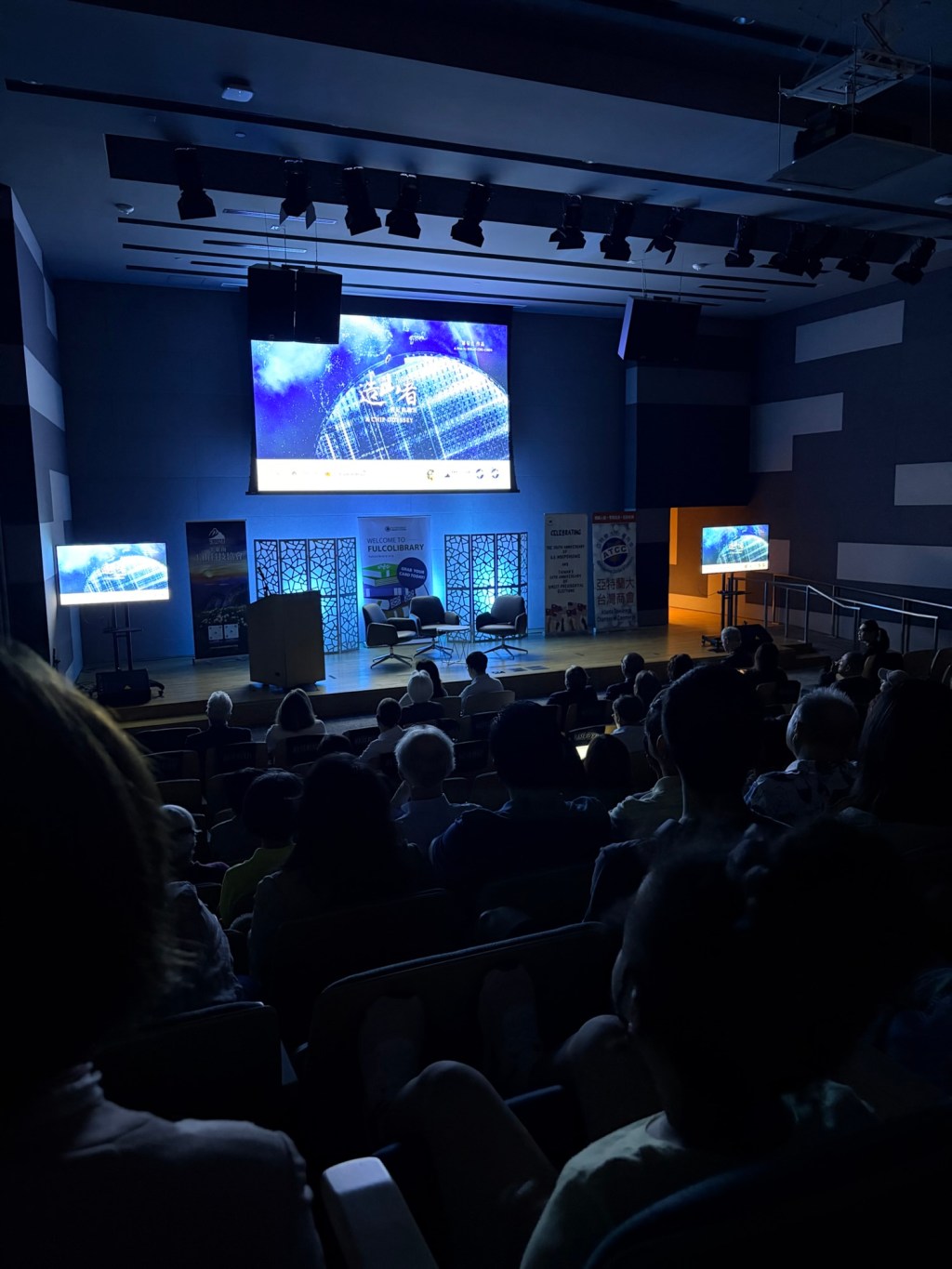
    This reality becomes even more visible when looking at the global semiconductor race. Recently, films and documentaries such as Chip Odyssey have highlighted the extraordinary geopolitical importance of Taiwan and companies like TSMC — Taiwan Semiconductor Manufacturing Company. What appears on the surface to be a story about computer chips is actually a story about power, intelligence, infrastructure, and the future of civilization itself.

    TSMC’s major advancements fundamentally changed the trajectory of modern computing and accelerated the rise of AI. Their breakthroughs were not simply about making chips smaller. They mastered the manufacturing of semiconductors at scales so advanced that very few organizations on Earth can replicate them. Through innovations in 7nm, 5nm, 3nm, and now emerging 2nm technologies, TSMC enabled chips to become faster, more energy efficient, and exponentially more powerful.
    This matters because AI depends on computation, and computation depends on chips.

    Every major AI breakthrough rests upon enormous computational infrastructure powered by advanced semiconductors. AI systems like large language models require massive amounts of processing capability to train and operate. Companies like NVIDIA, Apple, AMD, and others design powerful chips, but many rely on TSMC to manufacture them. In many ways, semiconductors have become the hidden nervous system of modern civilization. The significance of this cannot be overstated.

    Smartphones, cloud computing, autonomous systems, financial markets, military infrastructure, healthcare systems, and artificial intelligence all depend on these microscopic pieces of silicon. What oil was to the industrial age, semiconductors are becoming to the intelligence age.

    This changes the Babel metaphor dramatically.
    The original tower was built with bricks reaching physically toward the heavens. Today’s tower is built with silicon reaching cognitively toward intelligence itself.


    At the base of this modern tower are rare earth minerals, energy systems, global supply chains, semiconductor fabrication plants, and cloud infrastructure. In the middle are algorithms, machine learning models, data centers, and autonomous systems. At the top are influence, prediction, economic power, military superiority, and increasingly, the ability to shape human perception itself.


    The competition is no longer simply about who can build the tallest tower. The competition is now about who controls the intelligence inside the tower.

    This is why the semiconductor race has become inseparable from national security and geopolitical strategy. Taiwan is no longer merely an island in the global economy. It has become one of the most strategically important regions in the world because modern civilization depends heavily on its semiconductor manufacturing capacity.

    Yet AI introduces another profound layer to this story. The original Babel narrative warned of humanity organizing around concentrated ambition without sufficient wisdom. Today AI creates the possibility of unprecedented concentration: concentrated data, concentrated computation, concentrated surveillance, concentrated influence, and concentrated decision-making power. A small number of corporations and governments may soon possess systems capable of shaping the thoughts, behaviors, and emotional reactions of billions of people through algorithms and predictive systems.

    In this sense, the “single language” of the future may not be spoken language at all.
    It may be algorithms.

    AI systems increasingly influence what people see, what people believe, what people purchase, who they trust, and how they emotionally respond to the world around them. This represents a form of psychological and informational power unlike anything humanity has previously encountered.

    At the same time, AI is beginning to influence semiconductor development itself. Artificial intelligence is now being used to optimize chip layouts, improve manufacturing efficiency, predict defects, automate portions of design, and accelerate materials research. This creates a powerful feedback loop: better chips create better AI, and better AI helps create better chips.

    The cycle compounds itself.

    The semiconductor industry and AI industry are no longer separate ecosystems. They are merging into one interconnected intelligence infrastructure.

    This is why the AI era feels spiritually and psychologically significant. Humanity is not simply building better machines. Humanity is building systems that increasingly mirror human cognition itself — systems capable of language generation, prediction, reasoning, optimization, and decision-making.

    The deeper question beneath the semiconductor race may therefore be this:

    Will AI become an extension of humanity’s highest values, or an amplifier of humanity’s unresolved shadows?
    Because technology evolves rapidly, but human wisdom evolves slowly.

    That may be the real danger.

    The greatest risk of AI may not be artificial intelligence itself, but amplified human immaturity operating at planetary scale. AI magnifies intent. A wise civilization could use these tools to cure disease, democratize education, reduce suffering, optimize sustainability, and foster collaboration across nations. An unwise civilization could use the same tools for surveillance, manipulation, economic displacement, autonomous warfare, engineered division, and social control.

    The faster technology evolves, the more people search for mindfulness, embodiment, nervous system regulation, spirituality, emotional intelligence, and meaning. Information abundance does not satisfy the human spirit. Optimization alone cannot heal emptiness.

    AI can generate content endlessly, but it cannot tell a person why their life matters. It can simulate conversation, but simulation is not human presence. It can analyze emotion, but analysis is not love.

    This may explain why coaching, therapy, yoga, mindfulness, leadership development, and healing-centered professions are becoming increasingly important in the AI era. As machines become more capable, humanity becomes more responsible for protecting what is deeply human.

    In the industrial age, value came from physical labor. In the information age, value came from knowledge. In the AI age, knowledge itself becomes increasingly abundant and automated. This shifts the value of human contribution toward something different: discernment, emotional intelligence, ethical judgment, adaptability, wisdom, creativity, and trust.

    The future may belong less to those who simply know the most information and more to those who know how to create meaning, build relationships, regulate emotion, navigate ambiguity, and lead human beings through complexity.

    Ironically, AI may force humanity to rediscover humanity.
    Perhaps AI does not destroy Babel. Perhaps it reveals its true nature. The story was never simply about different languages. It was about what happens when humanity gains power faster than wisdom.

    Today we stand before another tower — a digital tower, an intelligent tower, a global tower built not from bricks, but from silicon, algorithms, computation, and human ambition.

    And once again, the question is not simply: “Can we build the tower?” The question is, “What kind of people are we becoming while we build it?”

  • Unleashing Your Inner Productivity: How to Achieve More in Less Time

    When do you feel most productive?

    Studies have suggested that women tend to be more productive on Monday and Tuesday than on other days of the week.

    For instance, a survey conducted by the staffing firm Accountemps found that 39% of women felt most productive on Mondays, while 34% felt most productive on Tuesdays. Another study published in the Journal of Applied Psychology found that women tend to have a more positive mood and higher energy levels at the start of the week, which may contribute to higher productivity.

    That said, it’s important for women to find their own optimal productivity strategies and to develop routines that work best for them.

    To make the most of highly productive days and avoid burnout, this requires a delicate balance between pushing yourself to achieve your goals and taking the necessary steps to maintain your physical and mental health. Here are some tips on how to do it:

    Prioritize and plan

    On highly productive days, it can be tempting to try to accomplish as much as possible, but this can lead to burnout. To avoid this, it’s important to prioritize your tasks and plan your day in advance. Focus on the most critical tasks that require your immediate attention, and delegate or postpone less important tasks if possible.

    Take breaks

    It’s essential to take breaks throughout the day to rest your mind and body. Taking short breaks can help you recharge your energy and focus, making you more productive in the long run. Try to take a 5-10 minute break every hour or so to stretch, move around, or do something that helps you relax and recharge.

    Practice self-care

    Engaging in activities that promote physical and mental well-being is crucial for avoiding burnout. Get enough sleep, eat nutritious foods, exercise regularly, and engage in activities that bring you joy and relaxation, such as reading, spending time in nature, or spending time with loved ones.

    Set boundaries

    On highly productive days, it can be easy to overwork and neglect other important aspects of your life. To avoid this, it’s important to set boundaries and stick to them. For instance, set a time when you stop working each day, and make sure to take time off on weekends or holidays.

    Celebrate your accomplishments

    Finally, it’s essential to celebrate your accomplishments and reward yourself for your hard work. Celebrating your successes can help you stay motivated and energized, making it easier to avoid burnout and maintain your productivity over time.

    In summary, to make the most of highly productive days while avoiding burnout, it’s essential to prioritize and plan, take breaks, practice self-care, set boundaries, and celebrate your accomplishments.

    Looking for the ultimate day planners? Checkout these finds on Amazon.

  • Stop “Eating Healthy.” Start Eating for Performance.

    If you’re a professional woman balancing meetings, deadlines, emails, family responsibilities, and the pressure to always be “on,” nutrition has to become more than an afterthought. The old version of healthy eating — salads at lunch, skipping meals, surviving on coffee, and trying to avoid carbs — no longer matches the reality of modern life. Today’s ambitious women need food that supports energy, mental clarity, hormone health, mood, focus, and long-term wellness. Food is no longer just about appearance. It’s about performance.

    One of the biggest mistakes many working women make is relying on caffeine instead of nourishment. A quick coffee and pastry may feel productive in the morning, but it often leads to an energy crash later in the day. Instead of building meals around convenience alone, it helps to focus on foods that stabilize energy levels. Protein-rich meals with healthy fats and fiber can help improve concentration, reduce cravings, and keep energy consistent throughout the workday. Eating well shouldn’t feel restrictive; it should feel supportive.

    Many women also confuse burnout with blood sugar crashes. Feeling exhausted at 3 PM is not always emotional fatigue — sometimes it’s a sign that your body hasn’t been fueled properly. Skipping breakfast, eating highly processed snacks, or grazing throughout the day can create cycles of spikes and crashes that affect mood, productivity, and focus. Learning how to balance meals in a way that keeps blood sugar steady can dramatically improve how you feel mentally and physically throughout the day.

    Hydration is another underrated part of wellness that directly impacts performance. Water affects focus, digestion, headaches, skin health, and even emotional regulation, yet many professionals spend their day dehydrated and overstimulated by caffeine. Creating small hydration habits throughout the day can improve energy in ways many people don’t realize until they begin paying attention to it consistently.

    Modern nutrition also requires a more realistic approach to convenience. Professional women are busy, and not every meal needs to be organic, homemade, or aesthetically perfect. The goal isn’t perfection; it’s reducing dependence on foods that leave you feeling sluggish and undernourished. There is nothing wrong with choosing options that make healthy eating easier and more sustainable. Wellness should fit into your life instead of becoming another stressful task to manage.

    Most importantly, women are beginning to shift away from the idea that healthy eating is about becoming smaller. Today, more women are focusing on strength, longevity, emotional wellness, hormone balance, and sustainable energy. The conversation is changing from “How little can I eat?” to “What helps me feel my best?” That shift creates a healthier and more empowering relationship with food.

    Healthy eating for professional women should not feel like punishment or pressure. It should feel like fuel for the life you’re building, the work you’re doing, and the person you’re becoming.

  • The Power Of Vulnerability

    At some point the mask must come off and we have to answer to our higher selves for emotional well being. Dr. Brené Brown, an author and research professor at the University of Houston, has spent the past two decades studying courage, vulnerability, shame, and empathy.

    There are four areas in our daily lives in which the power of vulnerability can help us step forward if we are willing to bring down the walls: relationship, work, community, and mind and body.

    Vulnerability essentially is the uncertain fear of not knowing what will happen in these four areas. Interestingly, the more we learn and understand can allow realistic expectations associated with them. We are not of the business of getting hurt; we come at life with eyes wide open.

    Here are 5 powers that walking into vulnerability sheds light on:

    Super Power # 1 Gratitude It’s easy to hate life, become trapped in stoicism, or get easily jaded when we are ungrateful. Gratitude is needed but also empowering. When joy takes over gratitude builds no resentment and is a self-check on what matters most.

    Super Power # 2 Self-awareness Vulnerability makes us more aware of who we are, who we are not, and makes clear our proximal distance to the reality of that. This understanding can help us see where the gaps are that need our attention. Self-awareness helps us to mind the gaps.

    Super Power # 3 Intellectual Growth —Vulnerability enlightens us and develops the possibility of things unknown. Instead of hiding from the truth we seek answers. Failure is one of the biggest Achilles heals of the mind. Intellectual Growth builds on the capacity to overcome fear of failure in our professional and personal lives.

    Super Power # 4 Emotional IQ — When we are vulnerable we accept that we need others and they need us. This opens us up to being receptive to listening and taking contextual clues when receiving feedback. Having a deepened sense of emotional intelligence can help us identify red flags early on. It’s okay to acknowledge the roll others play in our daily lives, however picking up on social and interpersonal cues will benefit in days ahead.

    Super Power # 5 Affirms the need for our own existence — You matter…You should know that it’s not by chance that you are here. Vulnerability calls us to our purpose. This calling helps others to see us in our most genuine selves. When we acknowledge who we are others don’t seek to downgrade us, instead they can quickly recognize our real value. Focusing on your own strengths does not lead to overcompensating. When we affirm our value there’s no need to seek external validation.

    To wrap up, go hug someone today. Allow room for vulnerability. Unleash these 5 Super Powers.

  • Career Reinvention, Burnout, and Building Confidence: A Conversation with Karen Natasha

    CEO & Founder Karen Natasha Coaching — Toronto, Canada

    For many women, career transitions are no longer rare moments in life — they are becoming part of modern professional identity. Between burnout, workplace culture shifts, leadership barriers, and evolving personal priorities, more women are reevaluating what success truly means and how they want to experience work.

    As companies increasingly invest in coaching, leadership development, and employee wellness, conversations around professional fulfillment are becoming more necessary than ever. Recently, The Launch Table spoke with Karen Natasha, Founder and CEO of Karen Natasha Coaching, a leadership and career transition company focused on helping professionals elevate their careers with confidence and clarity. With more than two decades of corporate experience and a background in executive coaching, Karen brings both lived experience and strategic insight into what it means to navigate today’s workplace as a woman of color.

    Hannah Collier:

    Many people dream about leaving corporate environments to build something more aligned with their purpose, but few actually do it. What pushed you to make that transition?

    Karen Natasha:

    I spent over 20 years working in corporate environments, and honestly, I experienced deep burnout. I also had a very difficult experience with leadership and workplace culture that affected my confidence and overall well-being. During that time, I realized I didn’t see enough women who looked like me in spaces where mentorship, leadership, and career development were happening. I wanted to create the kind of support system I wish I had while navigating my own career journey.

    Hannah Collier:

    Burnout has become one of the defining workplace conversations of this generation. In your opinion, what are professionals getting wrong about burnout?

    Karen Natasha:

    A lot of people think burnout is simply about being tired, but it’s deeper than that. It’s emotional exhaustion, feeling unseen, lacking support, and constantly operating in environments where you don’t feel psychologically safe. Many professionals normalize stress because high performance has been glorified for so long. But eventually, your body and mind force you to pay attention.

    Hannah Collier:

    Your work focuses heavily on leadership and career advancement for BIPOC professionals. Why was it important for you to center that audience in your coaching practice?

    Karen Natasha:

    Because representation matters. Many BIPOC professionals are navigating environments where they may feel isolated, overlooked, or underestimated. I personally experienced that while climbing from receptionist to executive-level roles. There are often unspoken challenges people face around visibility, confidence, communication, and access to mentorship. I wanted to build a company that helps professionals recognize their value, strengthen their leadership presence, and feel empowered in their growth.

    Hannah Collier:

    What are some of the biggest mindset shifts people need to make when transitioning careers or trying to level up professionally?

    Karen Natasha:

    One of the biggest shifts is understanding that career growth doesn’t happen passively. Many professionals stay in roles for years waiting to be noticed instead of learning how to advocate for themselves. Another shift is realizing that confidence is built through action, not perfection. You have to be willing to have difficult conversations, take strategic risks, and position yourself differently if you want different results.

    Hannah Collier:

    There’s a growing conversation around emotional intelligence and leadership presence in the workplace. How important are those skills today?

    Karen Natasha:

    They’re critical. Technical skills may get you into the room, but emotional intelligence, communication, self-awareness, and leadership presence are what help people grow sustainably. Organizations are paying more attention to how leaders make people feel, not just what they produce. Professionals who can build trust, communicate effectively, and lead with emotional awareness are becoming incredibly valuable.

    Hannah Collier:

    What does transformation typically look like for clients after working with you?

    Karen Natasha:

    Transformation looks different for everyone, but one common theme is confidence. Many clients leave with more clarity around who they are, what they want, and how they want to show up professionally. We help people strengthen their voice, develop strategic goals, improve leadership skills, and create actionable plans that move them forward personally and professionally.

    Hannah Collier:

    What trends are you currently seeing in the workplace and career development space?

    Karen Natasha:

    A lot of professionals feel stuck. They’ve been in roles for several years but don’t know how to initiate conversations about advancement or navigate the next step. At the same time, companies are beginning to understand that development and wellness matter when it comes to retaining talent. Coaching is becoming less of a luxury and more of a leadership investment.

    Hannah Collier:

    What advice would you give to women currently questioning whether they should pivot in their careers?

    Karen Natasha:

    Don’t ignore the signs that something needs to change. Growth often starts with discomfort. Invest in yourself, seek support, and remember that your career journey doesn’t have to look like anyone else’s. Reinvention is possible at every stage of life.

    Karen Natasha Coaching offers coaching, leadership training, executive development, and organizational consulting designed to help professionals grow with intention and confidence. Her Elev8 program focuses on helping clients strengthen leadership capacity through a design-thinking approach to personal and professional development.

  • “Dial it in”— Peak Your Performance at Work

    Have you ever heard of the phrase, “Dial it In”? It’s a concept to help reach a state of high performance, focus, and expertise.

    To get better at what you do, figure out what your top priorities are. Give yourself time to create actionable tasks to contribute to the completion of your 20% vs 80%.

    Stop trying to be everything to everybody. Enable a work environment that allows you to get the right things done.