Blog

  • Beyond Babel: In an AI World, Do the Problems of Human Division Disappear?

    Beyond Babel: In an AI World, Do the Problems of Human Division Disappear?

    Thousands of years after the story of the Tower of Babel, humanity is once again reaching toward the heavens — this time through artificial intelligence. In the biblical story, humanity spoke one language and shared one collective vision. People gathered in the land of Shinar and decided to build a city and a tower so great that it would reach the heavens. Their goal was not only architectural. achievement, but significance. They wanted to make a name for themselves and avoid being scattered across the earth. In response, God disrupted their communication, confusing their language and scattering humanity into different nations and peoples.

    For centuries, Babel has symbolized division, misunderstanding, ego, fragmentation, and the limits of human ambition. It has often been interpreted as the moment humanity lost a unified voice. Yet today, something remarkable is unfolding. Artificial intelligence now has the ability to translate languages in real time. A person in Atlanta can communicate instantly with someone in Tokyo, Lagos, or São Paulo. AI systems can transcribe speech, localize communication, and bridge barriers that once separated entire civilizations. For the first time in history, humanity is approaching something close to universal communication.

    This raises a fascinating question: if AI can eliminate language barriers, does it reverse Babel? Or were the problems of Babel never truly about language to begin with?

    Today’s technological age resembles Babel more than many people realize. We are constructing massive digital towers composed of global networks, artificial intelligence systems, virtual economies, cloud infrastructures, semiconductor ecosystems, and increasingly, synthetic forms of intelligence. Humanity is once again unified around innovation, scale, and creation. Technology has given us the ability to coordinate globally in ways ancient civilizations could never imagine. AI is becoming a universal translator not only of words, but of information itself. Yet despite this unprecedented connectivity, people remain deeply divided. Because misunderstanding was never only linguistic.

    AI can translate words, but it cannot automatically create empathy. It can interpret sentences while still missing emotional context, historical pain, cultural nuance, power dynamics, intent, and lived experience. Two people can understand each other’s language perfectly and still fail to truly understand one another. This is where the deeper lesson of Babel begins to emerge. The true fracture may not have been vocabulary at all. It may have been human ego, ambition without wisdom, and unity disconnected from deeper purpose.

    Technology can solve communication problems, but humanity still must solve meaning problems.
    Many people read the Babel story as the origin story of multiple languages, but perhaps the confusion of language symbolized something deeper: the fragmentation of human consciousness itself. Before Babel, humanity functioned collectively. After Babel, humanity divided into tribes, nations, identities, ideologies, and competing realities. In many ways, we are still living inside Babel today — not because we speak different languages, but because we increasingly experience different truths.

    Modern algorithms now shape reality itself. People consume different news, different histories, different interpretations, and different moral frameworks depending on the digital environments they inhabit. Ironically, AI may not eliminate Babel; it may intensify it. The confusion is no longer simply about language. It is about truth, perception, and shared reality.

    The modern digital world has created a profound paradox. Humanity has more access to information than any civilization in history, yet trust continues to decline. Loneliness increases. Polarization accelerates. Attention itself becomes fragmented. We are hyperconnected technologically while becoming psychologically disconnected from one another. The internet solved distance. Social media solved speed. AI may solve translation. But none of these technologies automatically solve alienation, fear, greed, insecurity, narcissism, or the human desire for power.

    In many ways, technology amplifies whatever already exists within humanity. A compassionate society may use AI for healing and accessibility. An anxious society may use AI for manipulation and surveillance. A fearful society may use AI for control. Technology is rarely neutral. It reflects the consciousness of the people creating and wielding it.

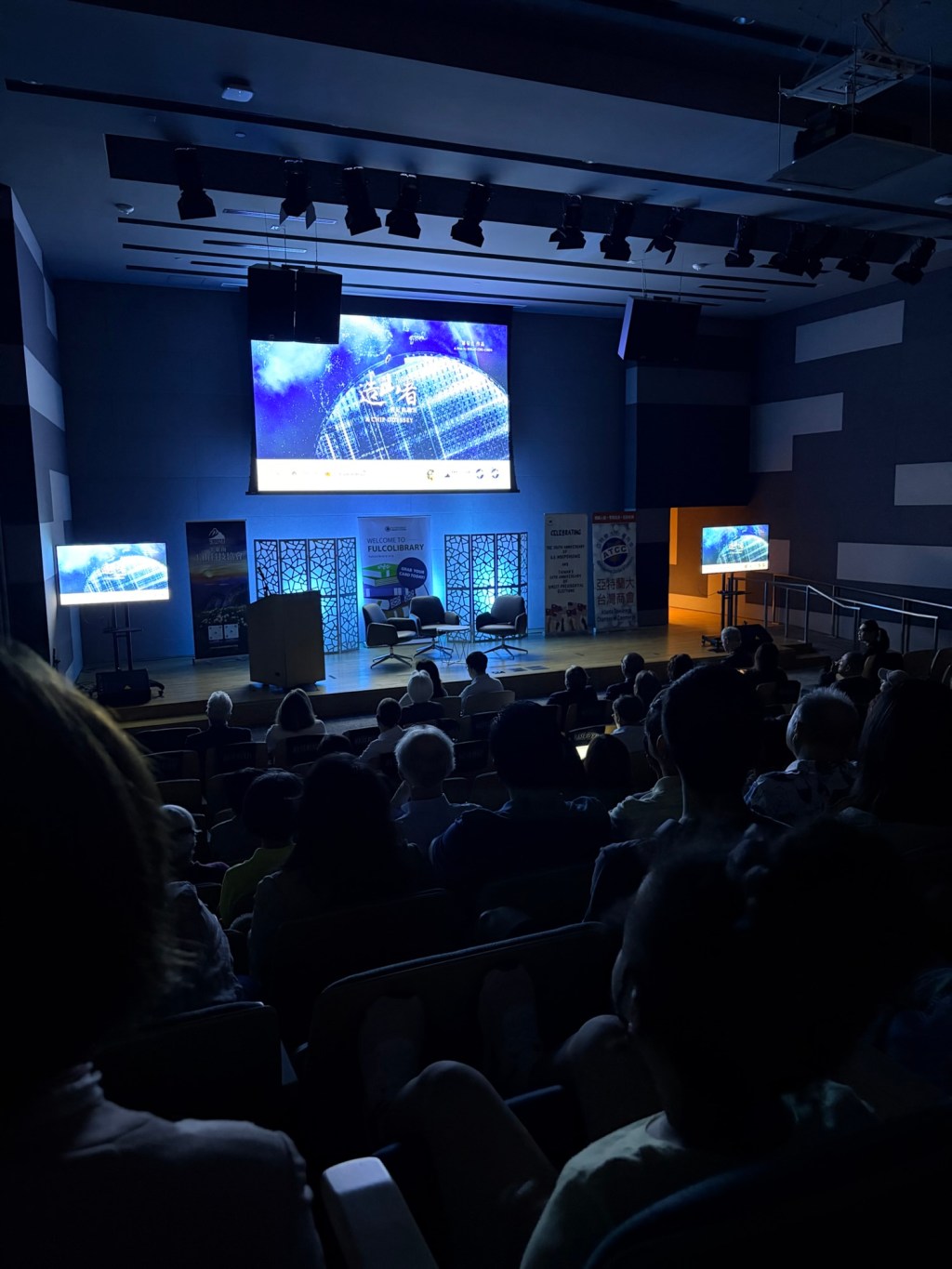
    This reality becomes even more visible when looking at the global semiconductor race. Recently, films and documentaries such as Chip Odyssey have highlighted the extraordinary geopolitical importance of Taiwan and companies like TSMC — Taiwan Semiconductor Manufacturing Company. What appears on the surface to be a story about computer chips is actually a story about power, intelligence, infrastructure, and the future of civilization itself.

    TSMC’s major advancements fundamentally changed the trajectory of modern computing and accelerated the rise of AI. Their breakthroughs were not simply about making chips smaller. They mastered the manufacturing of semiconductors at scales so advanced that very few organizations on Earth can replicate them. Through innovations in 7nm, 5nm, 3nm, and now emerging 2nm technologies, TSMC enabled chips to become faster, more energy efficient, and exponentially more powerful.
    This matters because AI depends on computation, and computation depends on chips.

    Every major AI breakthrough rests upon enormous computational infrastructure powered by advanced semiconductors. AI systems like large language models require massive amounts of processing capability to train and operate. Companies like NVIDIA, Apple, AMD, and others design powerful chips, but many rely on TSMC to manufacture them. In many ways, semiconductors have become the hidden nervous system of modern civilization. The significance of this cannot be overstated.

    Smartphones, cloud computing, autonomous systems, financial markets, military infrastructure, healthcare systems, and artificial intelligence all depend on these microscopic pieces of silicon. What oil was to the industrial age, semiconductors are becoming to the intelligence age.

    This changes the Babel metaphor dramatically.
    The original tower was built with bricks reaching physically toward the heavens. Today’s tower is built with silicon reaching cognitively toward intelligence itself.


    At the base of this modern tower are rare earth minerals, energy systems, global supply chains, semiconductor fabrication plants, and cloud infrastructure. In the middle are algorithms, machine learning models, data centers, and autonomous systems. At the top are influence, prediction, economic power, military superiority, and increasingly, the ability to shape human perception itself.


    The competition is no longer simply about who can build the tallest tower. The competition is now about who controls the intelligence inside the tower.

    This is why the semiconductor race has become inseparable from national security and geopolitical strategy. Taiwan is no longer merely an island in the global economy. It has become one of the most strategically important regions in the world because modern civilization depends heavily on its semiconductor manufacturing capacity.

    Yet AI introduces another profound layer to this story. The original Babel narrative warned of humanity organizing around concentrated ambition without sufficient wisdom. Today AI creates the possibility of unprecedented concentration: concentrated data, concentrated computation, concentrated surveillance, concentrated influence, and concentrated decision-making power. A small number of corporations and governments may soon possess systems capable of shaping the thoughts, behaviors, and emotional reactions of billions of people through algorithms and predictive systems.

    In this sense, the “single language” of the future may not be spoken language at all.
    It may be algorithms.

    AI systems increasingly influence what people see, what people believe, what people purchase, who they trust, and how they emotionally respond to the world around them. This represents a form of psychological and informational power unlike anything humanity has previously encountered.

    At the same time, AI is beginning to influence semiconductor development itself. Artificial intelligence is now being used to optimize chip layouts, improve manufacturing efficiency, predict defects, automate portions of design, and accelerate materials research. This creates a powerful feedback loop: better chips create better AI, and better AI helps create better chips.

    The cycle compounds itself.

    The semiconductor industry and AI industry are no longer separate ecosystems. They are merging into one interconnected intelligence infrastructure.

    This is why the AI era feels spiritually and psychologically significant. Humanity is not simply building better machines. Humanity is building systems that increasingly mirror human cognition itself — systems capable of language generation, prediction, reasoning, optimization, and decision-making.

    The deeper question beneath the semiconductor race may therefore be this:

    Will AI become an extension of humanity’s highest values, or an amplifier of humanity’s unresolved shadows?
    Because technology evolves rapidly, but human wisdom evolves slowly.

    That may be the real danger.

    The greatest risk of AI may not be artificial intelligence itself, but amplified human immaturity operating at planetary scale. AI magnifies intent. A wise civilization could use these tools to cure disease, democratize education, reduce suffering, optimize sustainability, and foster collaboration across nations. An unwise civilization could use the same tools for surveillance, manipulation, economic displacement, autonomous warfare, engineered division, and social control.

    The faster technology evolves, the more people search for mindfulness, embodiment, nervous system regulation, spirituality, emotional intelligence, and meaning. Information abundance does not satisfy the human spirit. Optimization alone cannot heal emptiness.

    AI can generate content endlessly, but it cannot tell a person why their life matters. It can simulate conversation, but simulation is not human presence. It can analyze emotion, but analysis is not love.

    This may explain why coaching, therapy, yoga, mindfulness, leadership development, and healing-centered professions are becoming increasingly important in the AI era. As machines become more capable, humanity becomes more responsible for protecting what is deeply human.

    In the industrial age, value came from physical labor. In the information age, value came from knowledge. In the AI age, knowledge itself becomes increasingly abundant and automated. This shifts the value of human contribution toward something different: discernment, emotional intelligence, ethical judgment, adaptability, wisdom, creativity, and trust.

    The future may belong less to those who simply know the most information and more to those who know how to create meaning, build relationships, regulate emotion, navigate ambiguity, and lead human beings through complexity.

    Ironically, AI may force humanity to rediscover humanity.
    Perhaps AI does not destroy Babel. Perhaps it reveals its true nature. The story was never simply about different languages. It was about what happens when humanity gains power faster than wisdom.

    Today we stand before another tower — a digital tower, an intelligent tower, a global tower built not from bricks, but from silicon, algorithms, computation, and human ambition.

    And once again, the question is not simply: “Can we build the tower?” The question is, “What kind of people are we becoming while we build it?”
  • Up Your Optimism Game: An Interview Charles Inniss

    Up Your Optimism Game: An Interview Charles Inniss

    Some conversations remind you just how deeply human we all are. In speaking with Charles Inniss, I found myself reflecting on how many high-achieving professionals silently carry stress, anxiety, disappointment, and emotional exhaustion behind polished resumes and busy calendars.

    What stood out to me most was not just Charles’ expertise as a coach and wellness professional—but his honesty. His willingness to speak openly about depression, divorce, hopelessness, and rebuilding joy felt deeply refreshing in a culture that often rewards performance over healing.

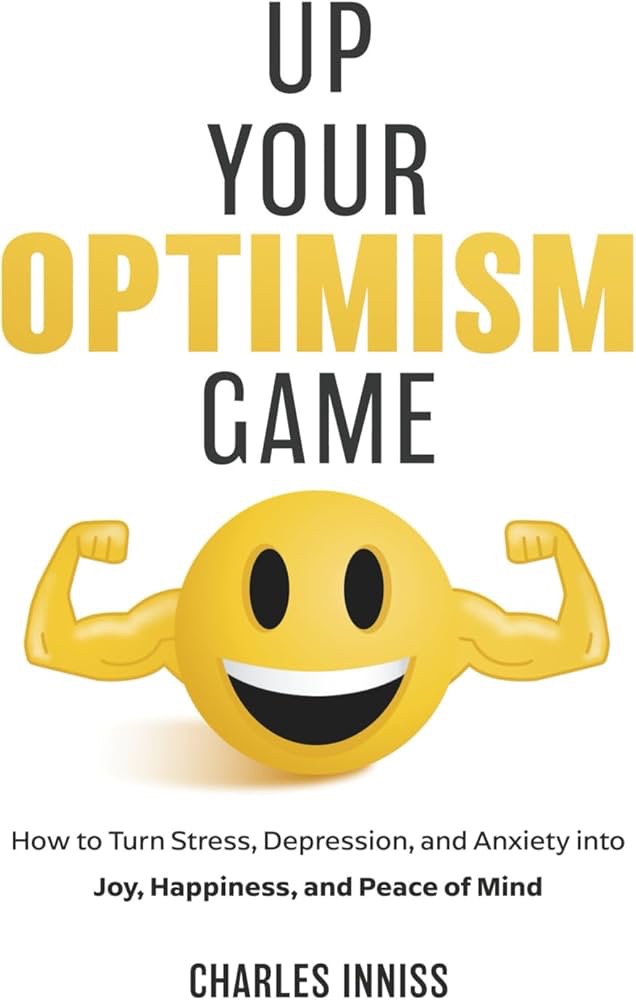
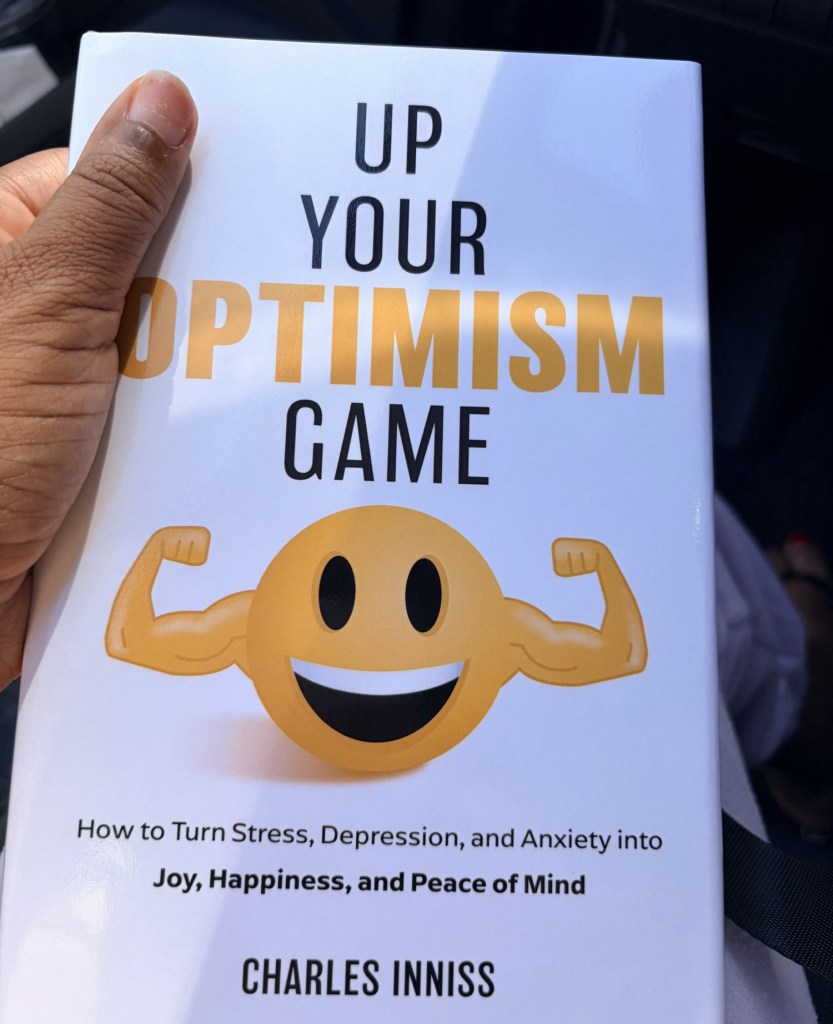
    His book, Up Your Optimism Game, invites readers into a different way of thinking about mental wellness: not as something reserved for crisis moments, but as a daily practice. A muscle. A discipline. A choice. And perhaps most importantly—it offers hope.

    Hannah Collier: What personal experiences first led you to explore optimism and mindset coaching?

    Charles Inniss:
    When I went through formal coach training with Wellcoaches back in 2013, they asked us to watch a TED Talk from Martin Seligman, who is considered the father of positive psychology. Watching that talk, so many light bulbs went off in my mind and from that moment on I became obsessed with positive psychology and the power of optimism.

    Hannah Collier: Was there a defining moment in your life that changed the way you viewed adversity or resilience?

    Charles Inniss: When I lost my job during the height of the pandemic, a wave of depression hit me. But once I started coaching myself to intentionally cultivate optimism my joy and hope started coming back even though my life was far from perfect at the time. This made me realize that external circumstances don’t have to dictate how much joy and peace we feel. We can cultivate joy even when life around us isn’t perfect.

    Listening to Charles describe this season of his life, I found myself thinking about how many people are waiting for life to become easier before allowing themselves peace. What makes his story compelling is not the absence of hardship, but the decision to cultivate hope in the middle of uncertainty.

    Hannah Collier: How has your professional background influenced your approach to optimism?

    Charles Inniss: I’m an anatomy nerd and started my career as a physical therapist and personal trainer. When you know how the body is organized you can make exercise recommendations to decrease pain or improve performance. As a coach, I pull many concepts from physical health over to mental health.

    The way I think about it just like we have physical muscles we also have mental muscles (aka thinking patterns).

    Mental muscles are divided into 2 categories. Pessimism Muscles generate negative emotions and Optimism Muscles generate positive emotions. So if someone wanted to feel more Joy, Happiness, and Peace they would have to strengthen the Optimism Muscles that generate those positive emotions.

    His framework around “mental muscles” stood out to me because it removes shame from the conversation around emotional wellness. Muscles can be trained. Patterns can be strengthened. And growth becomes possible when we stop seeing ourselves as broken and start seeing ourselves as capable of development.

    Hannah Collier: Many people confuse optimism with ignoring reality—how do you define true optimism?

    Charles Inniss: First I would say that we need both sets of muscles to move through life. The strength of negativity is that it serves to protect us and keep us safe. Stay back! Don’t Risk! Don’t trust! Are all negative thinking patterns designed to protect us. Negativity is the underlying mindset of Survival Mode and it’s important to keep us alive.

    But if we want to Thrive and live our best lives we need to tap into Optimism because it breeds Hope Courage Perseverance, Joy and Peace.

    I’d also say that optimism is partly a matter of focus, and both optimists and pessimists can be realists. If we focus on real negative things like war, crimes, sickness, and loss we’ll feel negative emotions, and if we focus on real positive things like cherished relationships, wins, strengths, and what we’re grateful for we’ll feel positive emotions.

    Focusing on the positives doesn’t mean the negatives don’t exist. Every situation has pros and cons. Every person has strengths and weaknesses. And our emotions are created by which aspect we focus on, so I try to encourage people to pause and choose for themselves what they’d like to focus their attention on.

    Charles’ distinction between surviving and thriving felt especially important. Rather than dismissing fear or negativity, he reframes them as protection—while also reminding us that survival mode was never meant to become a permanent lifestyle.

    Hannah Collier: What inspired you to turn these ideas into a book?

    Charles Inniss: I believe that the best gift to the world is a person who is truly thriving emotionally. Seeing the impact that optimism was making with my clients, I was inspired to capture the best ideas and write a practical book that could help others shine their brightest.

    Hannah Collier: Who did you write this book for, and what challenges are they facing?

    Charles Inniss: I wrote this book for someone who already has the degrees and career, but despite their academic and career success they still struggle with stress, anxiety, and overwhelm.

    That answer resonated deeply because achievement and emotional wellness are not always the same thing. So many high performers quietly normalize burnout while appearing successful to the outside world.

    Hannah Collier: What are some common thought patterns that prevent people from developing a more optimistic mindset?

    Charles Inniss: One of the top mindsets that holds people back from positive emotions is criticism (both of self and others). When someone is highly self-critical they feel more inadequate, anxious, sad, unworthy and hopeless. And when someone is highly critical of others they feel more anger, frustration, and worry.

    But if someone starts to strengthen their Self-Appreciation Muscles and their Appreciation of Others Muscles they can dramatically change their relationship with self and others and feel more joy, happiness, and peace.

    Hannah Collier: In your opinion, can optimism be learned, or is it something people are born with?

    Charles Inniss: Optimism can definitely be learned and developed just like any other skill. We all have a certain emotional predisposition based on our genetics, but we can also adapt, learn, and grow.

    Hannah Collier: What role does self-talk play in shaping a person’s mental outlook?

    Charles Inniss: Everyone talks to themselves, the question is always what are we saying? In my book, I refer to speaking as cardio for your mindset. What our ears hear, especially coming from our own mouths, carries a lot of weight in our minds. So we can use our voice to train our brain to follow more positive paths.

    “Cardio for your mindset” is one of those phrases that stays with you. It’s a reminder that our words are never neutral—they are either strengthening us or draining us.

    Hannah Collier: Were there any chapters or concepts that felt especially personal or vulnerable for you to write about?

    Charles Inniss: I felt some vulnerability talking about being depressed despite being a smart student, but the thing I wrestled the most with including was how painful divorce was and how the shame that I felt caused me to suffer in silence. In the end I chose to include it because I knew other people could relate to the challenging experience and emotions.

    There’s tremendous courage in allowing people to see the parts of your life that didn’t go according to plan. Often, that honesty becomes the very thing that gives others permission to heal.

    Hannah Collier: What practical exercises or habits from the book do you personally use in your own life?

    Charles Inniss: We can feel more joy and peace through how we take care of our bodies, what we do, and how we think. I refer to those as Body Care, Behavior (Soul) Care, and Mind Care.

    From a Body Care perspective, I try to move everyday, eat healthy, go to sleep early and spend some time in nature. The beach is my happy place and I love sitting on the sand and doing breathing exercises as I listen to the waves.

    From a behavior perspective I love creating, connecting, and playing games. Game night with friends and family really feeds my soul.

    From a mind perspective I keep a gratitude journal, practice decatasrophizing, and I regularly workout my Hope and other Optimism Muscles just like I mention in the book.

    What I appreciated most here was how grounded these practices are. Healing doesn’t always arrive through dramatic breakthroughs. Sometimes it looks like sleep, sunlight, movement, laughter, connection, and breath.

    Hannah Collier: How do you stay optimistic during periods of uncertainty, disappointment, or burnout?

    Charles Inniss: The hard part of my life during the pandemic taught me how to cultivate hope even in challenging situations and working on my book gave me even better language to help me navigate my personal challenges.

    Hope is the light. Sometimes I look for light in the world. Sometimes I look for light in other people, and sometimes I look for the light in myself. That’s the first part. Then I try to use that light to inspire me to take a positive step, whether it’s asking for help, taking care of my body, connecting with others, or learning a new skill.

    “Hope is the light” may have been the line that stayed with me the longest after our conversation ended. Simple. Powerful. Necessary.

    Hannah Collier: Did writing this book change your own mindset in any way?

    Charles Inniss: After I published I was feeling a bit overwhelmed about all that was to come and my Dad said to me read your book 🙂 I always considered myself an optimist. Writing the book helped me develop a depth and understanding for how to more easily cultivate it.

    Hannah Collier: What do you hope readers will begin doing differently after reading your book?

    Charles Inniss: I hope that readers will start intentionally cultivating their own optimism so that they feel more joy and peace and can create the biggest positive difference at home, at work and in the world.

    Hannah Collier: If readers remember only one message from this book years from now, what would you want it to be?

    Charles Inniss: Shine Bright, Keep the Faith, and Never Give Up Hope.

    What stayed with me most after this conversation is that Charles doesn’t present optimism as denial or forced positivity. Instead, he presents it as a practice—one rooted in awareness, intention, and emotional resilience.

    Up Your Optimism Game feels especially timely for professionals navigating burnout, uncertainty, and the quiet emotional weight that often accompanies achievement. And perhaps that is the real invitation of this book: not simply to think positively, but to believe that joy and peace are still available to us, even in imperfect seasons.

    Author:

    Charles Inniss, DPT, PCC, NBC-HWC, has spent years helping professionals better understand the connection between mindset, emotional wellness, and performance. As a physical therapist, board-certified health and wellness coach, speaker, author, and instructor with Wellcoaches, his work sits at the intersection of science, coaching, and human resilience. Through Up Your Optimism Game, he’s encouraging people to see optimism not as toxic positivity, but as a skill that can be strengthened over time.

    Hannah Collier, whose work spans executive coaching, mindfulness, yoga therapy, and leadership development, the conversation felt deeply aligned with the kind of healing many high-achieving professionals are quietly searching for. As an executive at Sefiro Health and founder of initiatives centered on emotional wellness and personal growth, Hannah’s work similarly explores how people can lead, live, and perform well without losing themselves in the process. Together, the conversation became less about “staying positive” and more about what it really looks like to care for the mind in a world that rarely tells people to slow down and breathe.

    You can purchase your copy of the book by clicking here.

  • Intrinsic Coaching Changed the Way I View Human Transformation

    Intrinsic Coaching Changed the Way I View Human Transformation

    Over the past year, I immersed myself in the study of intrinsic coaching approaches through my training with Intrinsic Solutions International. What began as a professional milestone in health and wellness coaching ultimately became something much deeper — a personal shift in how I understand human behavior, motivation, healing, and growth.

    Before this experience, I had already been exposed to many coaching styles and leadership frameworks throughout my career. I had studied performance, communication, mindset, leadership development, behavior change, and wellness coaching. Like many professionals in helping fields, I understood structure, accountability, and goal achievement.

    But intrinsic coaching introduced me to a different perspective.

    It challenged the idea that people transform simply because they are given better advice, stricter accountability, or more information.

    Instead, I learned that sustainable transformation often happens when people reconnect with themselves.

    Coaching Beyond Performance

    One of the biggest distinctions I noticed during my training was the shift away from “fixing” people.

    Many traditional approaches to coaching focus heavily on outcomes:

    • Hit the goal
    • Improve performance
    • Increase productivity
    • Lose the weight
    • Build the habit
    • Stay disciplined

    While those things matter, intrinsic coaching encouraged me to look deeper beneath behavior.

    I began to see that many people are not struggling because they lack intelligence, ambition, or capability. Often, they are navigating emotional exhaustion, internal conflict, fear, self-protection, unresolved experiences, or environments that disconnected them from their own needs and values.

    That realization changed the way I approach people entirely.

    The Power of Internal Motivation

    One of the concepts that impacted me most was the difference between intrinsic and extrinsic motivation.

    So much of society is built on external pressure:

    • Achievement
    • Validation
    • Productivity
    • Appearance
    • Status
    • Approval

    People are often taught to pursue change because they fear failure or want acceptance.

    Intrinsic coaching helped me understand that lasting change usually requires something deeper:

    • Meaning
    • Alignment
    • Identity
    • Purpose
    • Self-awareness
    • Internal readiness

    I realized that when people connect to why something matters to them personally, transformation becomes more sustainable and compassionate.

    This perspective especially resonated with me in health and wellness coaching, where behavior change is rarely just about information. Most people already know what they “should” do. The deeper challenge is often emotional, psychological, or environmental.

    Learning to Listen Differently

    Another profound shift for me was learning the art of deeper listening.

    Intrinsic coaching taught me to listen beyond surface-level goals and hear:

    • emotional patterns,
    • internal narratives,
    • limiting beliefs,
    • values,
    • fears,
    • and even the unmet needs beneath behavior.

    I learned that sometimes people do not need immediate solutions as much as they need space for reflection, awareness, and clarity.

    That level of listening creates a very different coaching relationship.

    Instead of trying to direct someone’s life, intrinsic coaching honors autonomy and self-discovery. It recognizes that people often already carry wisdom within themselves — even if stress, trauma, burnout, or conditioning have made it difficult to access.

    Why This Approach Felt So Human

    What stood out most about intrinsic coaching was how human it felt.

    It created space for compassion instead of judgment.

    Rather than labeling people as lazy, unmotivated, resistant, or lacking discipline, intrinsic approaches helped me understand behavior through a lens of curiosity and context.

    This perspective aligned deeply with my own values and experiences in wellness, mindfulness, yoga, coaching, and leadership development.

    Over time, I realized that transformation is not always about becoming someone entirely new. Sometimes it is about removing the noise, pressure, fear, and conditioning that disconnect people from themselves in the first place.

    How This Training Influenced Me Personally

    This training did not only influence my work as a coach — it influenced me personally.

    It challenged me to examine:

    • my own motivations,
    • my own patterns,
    • my relationship with achievement,
    • and how I define success and well-being.

    It reminded me that growth does not always have to come through force.

    Sometimes growth happens through awareness.

    Through slowing down.
    Through honesty.
    Through alignment.
    Through learning how to trust yourself again.

    The Future of Coaching

    As coaching continues to evolve, I believe intrinsic approaches will become increasingly important.

    People today are overwhelmed by pressure, burnout, comparison, and constant performance demands. Many are searching not just for productivity, but for meaning, balance, emotional well-being, and sustainable ways to live and lead.

    Intrinsic coaching meets people in that space.

    It recognizes that human beings are not machines to optimize endlessly. We are emotional, adaptive, complex individuals whose behaviors are deeply connected to our experiences, environments, beliefs, and needs.

    That understanding has transformed the way I coach, lead, communicate, and support others.

    Final Reflection

    Completing this training was more than earning another certification for me. It was a milestone in understanding the deeper layers of human transformation.

    I walked away with greater appreciation for:

    • self-awareness,
    • compassionate accountability,
    • intrinsic motivation,
    • mindful behavior change,
    • and the importance of creating space for people to reconnect with themselves.

    Most importantly, I left with a stronger belief that meaningful transformation is rarely forced.

    It is cultivated.

  • Why I’m Starting a 5AM Club

    Why I’m Starting a 5AM Club

    I’ve been thinking a lot about how loud life feels right now.

    Every day, there is something new to take in. The news is heavy. People are being laid off. AI is changing the way we work. Prices keep rising. Careers feel less predictable. And in the middle of all of that, we still have lives to live, people to love, bills to pay, bodies to care for, and dreams we’re trying not to give up on.

    It’s a lot.

    That’s why I’m starting a 5AM Club.

    Not because waking up at 5AM makes you better than anyone else. Not because I think everyone needs to become a strict morning person. And definitely not because I want another space where people feel like they aren’t doing enough.

    I’m starting it because I think a lot of us are craving a little more rhythm. A little more focus. A little more peace. A little more accountability that feels supportive, not stressful.

    The idea of a 5AM Club is not new. Long before it had a name, people used the early morning as a time for prayer, movement, writing, study, planning, and reflection. Spiritual communities, athletes, writers, entrepreneurs, and everyday people have all used the quiet of the morning to prepare themselves for the day ahead.

    The phrase “5AM Club” became more widely known through leadership and personal development author Robin Sharma, who popularized the idea of waking up early and using the first part of the day with intention. Over time, people began creating their own versions of 5AM clubs for fitness, prayer, studying, entrepreneurship, wellness, and accountability.

    That history matters to me because I do not see this as just a productivity trend. At its best, a 5AM Club is about choosing how you begin before the world starts choosing for you.

    For me, the morning has a certain kind of honesty to it. Before the phone starts ringing, before the emails come in, before the meetings, the errands, the responsibilities, and the noise of the world — there is a small window where you can hear yourself.

    That small window matters.

    A 5AM Club is about using that time to check in before the day takes over. It’s a place to ask yourself: How am I really doing? What do I need today? What am I focused on? What am I not carrying into this day? What is one small thing I can do for my mind, body, or spirit?

    This is not about being perfect.

    Some mornings you may wake up at 5. Some mornings it may be 6:30. Some mornings you may have a whole routine. Other mornings, all you may have is a few words, a prayer, a stretch, or a cup of coffee.

    That still counts.

    What matters is that you are choosing to show up for yourself.

    The world is changing quickly, and I don’t want us to feel like we are only reacting to everything around us. I want us to feel like we still have some say in how we begin. Some agency. Some grounding. Some support. Some quiet discipline.

    That is what this space is for.

    You can expect simple morning check-ins, honest reflection, encouragement, and a community of people who are trying to become more focused and grounded in real life. We’ll talk about wellness, discipline, goals, rest, responsibility, uncertainty, and how to keep going without abandoning ourselves.

    What you should not expect is shame.

    This is not hustle culture. This is not a competition. This is not a performance. This is not about waking up early just to do more and more and more.

    It’s about starting the day with yourself instead of starting the day already overwhelmed.

    So if life has felt loud lately, if your mornings have felt rushed, if you’ve been craving more focus, or if you just want to begin your day with a little more intention, I hope you’ll join us.

    Welcome to a 5AM Club.

    This is where we begin.

  • The New Social Contract in the Age of AI

    The New Social Contract in the Age of AI

    If AI and robotics dramatically increase productivity while reducing the need for human labor in many areas, then the financial burden placed on humans should decrease — while the value of uniquely human contribution should increase. Society cannot continue operating under economic systems designed for industrial-era scarcity while simultaneously embracing technologies capable of producing abundance at unprecedented scale. As artificial intelligence assumes more responsibility for repetitive, analytical, logistical, and operational tasks, the economic benefits generated by these systems should not remain concentrated solely among corporations and shareholders. Workers, consumers, students, and families should experience tangible relief through higher compensation, reduced costs, and improved quality of life.

    In the workplace, employees should demand higher wages and stronger forms of value-sharing as AI expands organizational productivity. Human workers are no longer simply performing manual or administrative labor; they are increasingly managing systems, interpreting outputs, solving complex interpersonal problems, and contributing emotional intelligence, ethics, creativity, leadership, and strategic thinking — all areas where human value remains essential. If one employee can now produce the output that once required an entire department due to AI augmentation, then compensation structures should reflect that increased productivity. The future of work should not reward humans less because machines are more capable; rather, it should reward humans more because their uniquely human contributions become increasingly rare and indispensable.

    At the same time, the cost of education should decrease significantly as AI transforms learning systems. Universities and educational institutions are rapidly adopting AI tools capable of tutoring students, automating administrative work, personalizing instruction, generating learning materials, translating content, and improving accessibility. These technologies dramatically lower the cost of delivering knowledge at scale. As a result, rising tuition costs become increasingly difficult to justify. Education should become more accessible, adaptive, and affordable, particularly when AI can supplement or enhance many traditional instructional functions. The future of education should prioritize learning outcomes and accessibility over maintaining expensive legacy systems that no longer reflect the realities of technological advancement.

    Beyond wages and education, the broader cost of living should also decline in an AI-driven economy. Robotics and intelligent automation are already reducing the costs associated with manufacturing, transportation, logistics, agriculture, customer service, and even portions of healthcare administration. As production becomes more efficient, basic necessities such as food, housing, energy, and consumer goods should become more affordable for the average person. If society reaches a point where machines can produce more with less labor, yet people continue struggling to afford rent, healthcare, childcare, or groceries, then the issue is no longer technological limitation but economic distribution. The promise of AI should not be a world where humans compete against machines for survival, but one where technological progress creates greater stability, dignity, and freedom for human life.

    This moment represents more than a technological transition; it represents a moral and economic crossroads. The central question of the AI era is not whether machines can outperform humans in certain tasks, but whether the wealth and efficiency generated by intelligent systems will improve human well-being on a broad scale. If productivity rises while wages stagnate, tuition increases, and living costs remain unaffordable, then society risks creating a future where technological advancement benefits only a narrow segment of the population. However, if leaders, policymakers, businesses, and workers collectively redefine how value is distributed, AI has the potential to reduce economic strain while elevating human potential.

    Ultimately, the rise of AI and robotics should force society to reconsider what humans truly deserve in an age of abundance. People should not only demand higher pay, but also greater access to affordable education, reduced living costs, improved work-life balance, and more opportunities to engage in meaningful, creative, and relational forms of work. The future economy should be designed not merely around efficiency, but around human flourishing.

    If the human role is to guide and supervise complex AI systems, then, humans should be compensated at higher rates for their part in this.

    If you enjoyed reading this article, make a donation!

  • Waymo Got a Parking Ticket… Now Let’s Talk About the Future of AI

    Waymo Got a Parking Ticket… Now Let’s Talk About the Future of AI

    Waymo vehicles are now being issued parking tickets and fines.

    Think about that for a second. We’ve officially entered an era where AI systems and autonomous machines are integrated into society deeply enough to inherit one of humanity’s oldest experiences: getting penalized for breaking the rules.

    What fascinates me most is how this shifts the conversation around policy, cost, careers, and AI itself.

    From a policy perspective, who is actually responsible when an autonomous vehicle violates traffic or parking regulations? Is it the passenger, the company, the engineers, the software, or the city infrastructure that failed to communicate effectively with the system? Governments and regulators are now being pushed into territory that didn’t exist a decade ago. Laws originally designed for human decision-making must now account for machine behavior operating in real-world environments.

    There’s also a major cost conversation happening underneath the surface. Parking tickets may sound minor, but when scaled across thousands of autonomous vehicles operating daily, even small inefficiencies become expensive operational realities. AI systems don’t eliminate overhead; in many ways, they create entirely new categories of operational and legal expense. Companies will need teams focused on AI governance, compliance, urban mobility strategy, and predictive infrastructure management to support these technologies responsibly.

    And then there’s the career impact. I don’t think AI simply removes jobs as much as it redistributes human expertise into new spaces. The rise of autonomous systems may create demand for AI policy analysts, ethics specialists, transportation strategists, compliance leaders, human-AI operations managers, and professionals who can bridge the gap between technology and society. The future of work may belong to people who understand both systems and human behavior.

    What this moment also reveals is something important about AI itself: AI does not remove societal complexity. It inherits it. If humans struggle with traffic laws, judgment calls, ethics, unpredictability, and urban systems, AI eventually encounters those same challenges at scale.

    We are no longer discussing whether AI will integrate into society. We are now discussing how society will adapt to living alongside AI systems every day.

    If you enjoyed reading this article, make a donation!

  • Wealth Women & Work Is Now The Launch Table

    After thoughtful reflection and growth, Venture Vogue is officially becoming The Launch Table — a rebrand that better reflects the direction, vision, and conversations I want to continue creating.

    While the name is changing, the heart of the platform remains the same. The Launch Table will continue exploring ideas around leadership, wellness, career growth, entrepreneurship, culture, creativity, and personal development through a thoughtful and grounded lens.

    The new name represents a space where ideas are shared, goals are developed, conversations are welcomed, and new beginnings are supported. A launch table is where preparation meets purpose — and that feels aligned with this next chapter.

    Thank you for continuing to grow with me. Same great content, renewed vision, and even more meaningful conversations ahead.

    — Hannah Collier

  • Unleashing Your Inner Productivity: How to Achieve More in Less Time

    When do you feel most productive?

    Studies have suggested that women tend to be more productive on Monday and Tuesday than on other days of the week.

    For instance, a survey conducted by the staffing firm Accountemps found that 39% of women felt most productive on Mondays, while 34% felt most productive on Tuesdays. Another study published in the Journal of Applied Psychology found that women tend to have a more positive mood and higher energy levels at the start of the week, which may contribute to higher productivity.

    That said, it’s important for women to find their own optimal productivity strategies and to develop routines that work best for them.

    To make the most of highly productive days and avoid burnout, this requires a delicate balance between pushing yourself to achieve your goals and taking the necessary steps to maintain your physical and mental health. Here are some tips on how to do it:

    Prioritize and plan

    On highly productive days, it can be tempting to try to accomplish as much as possible, but this can lead to burnout. To avoid this, it’s important to prioritize your tasks and plan your day in advance. Focus on the most critical tasks that require your immediate attention, and delegate or postpone less important tasks if possible.

    Take breaks

    It’s essential to take breaks throughout the day to rest your mind and body. Taking short breaks can help you recharge your energy and focus, making you more productive in the long run. Try to take a 5-10 minute break every hour or so to stretch, move around, or do something that helps you relax and recharge.

    Practice self-care

    Engaging in activities that promote physical and mental well-being is crucial for avoiding burnout. Get enough sleep, eat nutritious foods, exercise regularly, and engage in activities that bring you joy and relaxation, such as reading, spending time in nature, or spending time with loved ones.

    Set boundaries

    On highly productive days, it can be easy to overwork and neglect other important aspects of your life. To avoid this, it’s important to set boundaries and stick to them. For instance, set a time when you stop working each day, and make sure to take time off on weekends or holidays.

    Celebrate your accomplishments

    Finally, it’s essential to celebrate your accomplishments and reward yourself for your hard work. Celebrating your successes can help you stay motivated and energized, making it easier to avoid burnout and maintain your productivity over time.

    In summary, to make the most of highly productive days while avoiding burnout, it’s essential to prioritize and plan, take breaks, practice self-care, set boundaries, and celebrate your accomplishments.

    Looking for the ultimate day planners? Checkout these finds on Amazon.

  • Move Your Business In The Right Direction With These 5 “Bottom Line Hacks”

    Increasing bottom line is an essential goal for any business as it determines the overall revenue generated by a company. There are several ways businesses can increase their bottom line. Here are five effective ways to do so:

    Offer incentives

    Offering incentives to customers can help increase sales and revenue. These incentives can be in the form of discounts, freebies, loyalty programs, or referral bonuses. Customers are more likely to make purchases if they feel they are getting a good deal or if there is an added value.

    Expand your product or service offerings

    By expanding your product or service offerings, you can attract new customers and generate more revenue from existing ones. This can be achieved by adding complementary products or services, introducing new product lines or services, or partnering with other businesses to offer a wider range of options.

    Increase your marketing efforts

    Marketing is essential for businesses to attract new customers and retain existing ones. Increasing your marketing efforts can help increase your visibility and attract more customers to your business. This can be done by utilizing social media, email marketing, paid advertising, or traditional marketing channels.

    Optimize your pricing strategy

    Pricing is a critical factor in determining revenue generated by a business. By optimizing your pricing strategy, you can increase revenue while maintaining profitability. This can be achieved by analyzing pricing data, testing different pricing models, or offering tiered pricing options.

    Improve customer experience

    Providing exceptional customer service and experience can help increase revenue by fostering customer loyalty and repeat business. This can be done by training staff on customer service, responding promptly to customer inquiries and complaints, or offering personalized experiences.

    By implementing these strategies, businesses can increase their bottom line and generate more revenue. However, it’s important to analyze the effectiveness of each strategy and adjust accordingly to achieve optimal results.

    (more…)