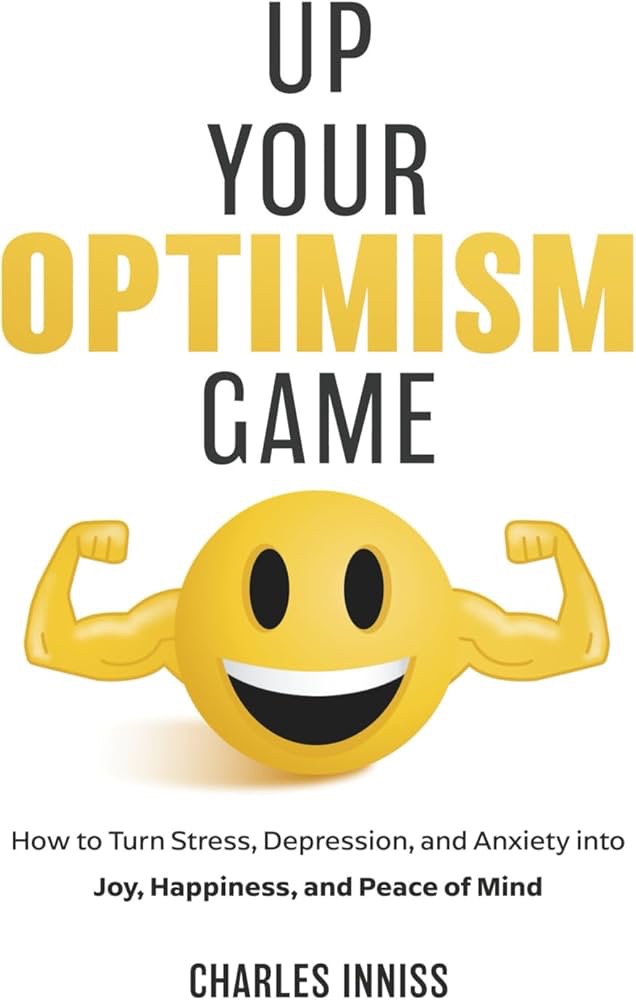
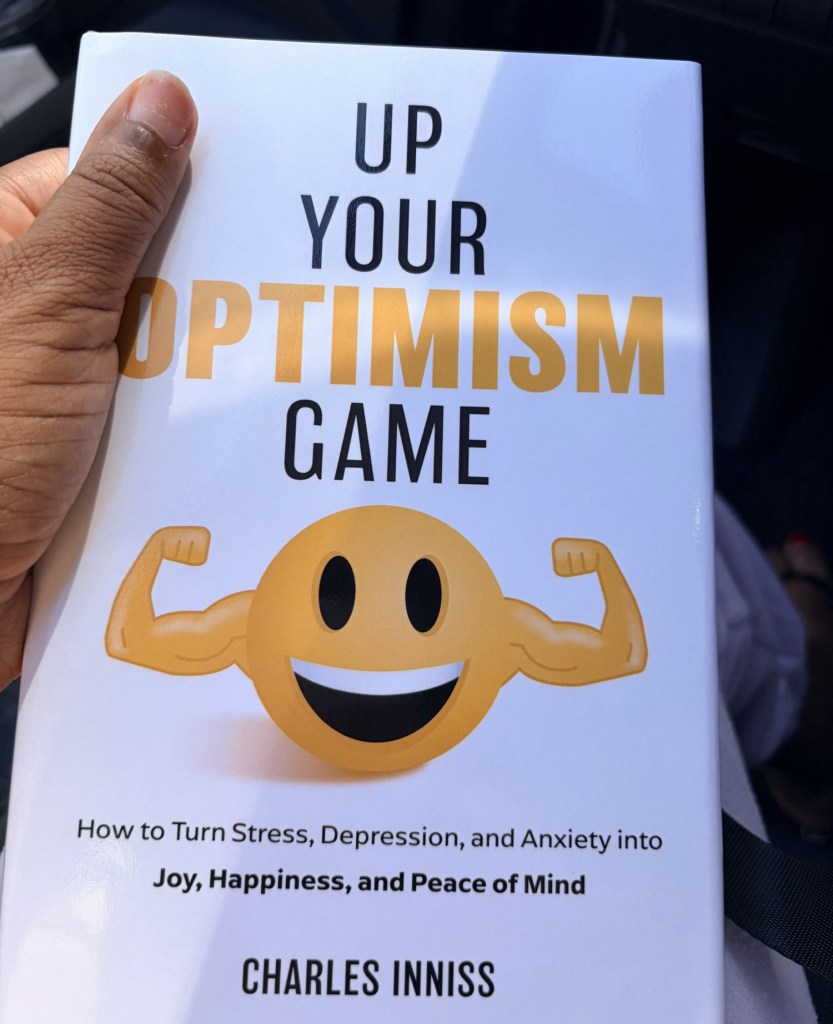
Some conversations remind you just how deeply human we all are. In speaking with Charles Inniss, I found myself reflecting on how many high-achieving professionals silently carry stress, anxiety, disappointment, and emotional exhaustion behind polished resumes and busy calendars.
What stood out to me most was not just Charles’ expertise as a coach and wellness professional—but his honesty. His willingness to speak openly about depression, divorce, hopelessness, and rebuilding joy felt deeply refreshing in a culture that often rewards performance over healing.
His book, Up Your Optimism Game, invites readers into a different way of thinking about mental wellness: not as something reserved for crisis moments, but as a daily practice. A muscle. A discipline. A choice. And perhaps most importantly—it offers hope.
Hannah Collier: What personal experiences first led you to explore optimism and mindset coaching?
Charles Inniss:
When I went through formal coach training with Wellcoaches back in 2013, they asked us to watch a TED Talk from Martin Seligman, who is considered the father of positive psychology. Watching that talk, so many light bulbs went off in my mind and from that moment on I became obsessed with positive psychology and the power of optimism.
Hannah Collier: Was there a defining moment in your life that changed the way you viewed adversity or resilience?
Charles Inniss: When I lost my job during the height of the pandemic, a wave of depression hit me. But once I started coaching myself to intentionally cultivate optimism my joy and hope started coming back even though my life was far from perfect at the time. This made me realize that external circumstances don’t have to dictate how much joy and peace we feel. We can cultivate joy even when life around us isn’t perfect.
Listening to Charles describe this season of his life, I found myself thinking about how many people are waiting for life to become easier before allowing themselves peace. What makes his story compelling is not the absence of hardship, but the decision to cultivate hope in the middle of uncertainty.
Hannah Collier: How has your professional background influenced your approach to optimism?
Charles Inniss: I’m an anatomy nerd and started my career as a physical therapist and personal trainer. When you know how the body is organized you can make exercise recommendations to decrease pain or improve performance. As a coach, I pull many concepts from physical health over to mental health.
The way I think about it just like we have physical muscles we also have mental muscles (aka thinking patterns).
Mental muscles are divided into 2 categories. Pessimism Muscles generate negative emotions and Optimism Muscles generate positive emotions. So if someone wanted to feel more Joy, Happiness, and Peace they would have to strengthen the Optimism Muscles that generate those positive emotions.
His framework around “mental muscles” stood out to me because it removes shame from the conversation around emotional wellness. Muscles can be trained. Patterns can be strengthened. And growth becomes possible when we stop seeing ourselves as broken and start seeing ourselves as capable of development.
Hannah Collier: Many people confuse optimism with ignoring reality—how do you define true optimism?
Charles Inniss: First I would say that we need both sets of muscles to move through life. The strength of negativity is that it serves to protect us and keep us safe. Stay back! Don’t Risk! Don’t trust! Are all negative thinking patterns designed to protect us. Negativity is the underlying mindset of Survival Mode and it’s important to keep us alive.
But if we want to Thrive and live our best lives we need to tap into Optimism because it breeds Hope Courage Perseverance, Joy and Peace.
I’d also say that optimism is partly a matter of focus, and both optimists and pessimists can be realists. If we focus on real negative things like war, crimes, sickness, and loss we’ll feel negative emotions, and if we focus on real positive things like cherished relationships, wins, strengths, and what we’re grateful for we’ll feel positive emotions.
Focusing on the positives doesn’t mean the negatives don’t exist. Every situation has pros and cons. Every person has strengths and weaknesses. And our emotions are created by which aspect we focus on, so I try to encourage people to pause and choose for themselves what they’d like to focus their attention on.
Charles’ distinction between surviving and thriving felt especially important. Rather than dismissing fear or negativity, he reframes them as protection—while also reminding us that survival mode was never meant to become a permanent lifestyle.
Hannah Collier: What inspired you to turn these ideas into a book?
Charles Inniss: I believe that the best gift to the world is a person who is truly thriving emotionally. Seeing the impact that optimism was making with my clients, I was inspired to capture the best ideas and write a practical book that could help others shine their brightest.
Hannah Collier: Who did you write this book for, and what challenges are they facing?
Charles Inniss: I wrote this book for someone who already has the degrees and career, but despite their academic and career success they still struggle with stress, anxiety, and overwhelm.
That answer resonated deeply because achievement and emotional wellness are not always the same thing. So many high performers quietly normalize burnout while appearing successful to the outside world.
Hannah Collier: What are some common thought patterns that prevent people from developing a more optimistic mindset?
Charles Inniss: One of the top mindsets that holds people back from positive emotions is criticism (both of self and others). When someone is highly self-critical they feel more inadequate, anxious, sad, unworthy and hopeless. And when someone is highly critical of others they feel more anger, frustration, and worry.
But if someone starts to strengthen their Self-Appreciation Muscles and their Appreciation of Others Muscles they can dramatically change their relationship with self and others and feel more joy, happiness, and peace.
Hannah Collier: In your opinion, can optimism be learned, or is it something people are born with?
Charles Inniss: Optimism can definitely be learned and developed just like any other skill. We all have a certain emotional predisposition based on our genetics, but we can also adapt, learn, and grow.
Hannah Collier: What role does self-talk play in shaping a person’s mental outlook?
Charles Inniss: Everyone talks to themselves, the question is always what are we saying? In my book, I refer to speaking as cardio for your mindset. What our ears hear, especially coming from our own mouths, carries a lot of weight in our minds. So we can use our voice to train our brain to follow more positive paths.
“Cardio for your mindset” is one of those phrases that stays with you. It’s a reminder that our words are never neutral—they are either strengthening us or draining us.
Hannah Collier: Were there any chapters or concepts that felt especially personal or vulnerable for you to write about?
Charles Inniss: I felt some vulnerability talking about being depressed despite being a smart student, but the thing I wrestled the most with including was how painful divorce was and how the shame that I felt caused me to suffer in silence. In the end I chose to include it because I knew other people could relate to the challenging experience and emotions.
There’s tremendous courage in allowing people to see the parts of your life that didn’t go according to plan. Often, that honesty becomes the very thing that gives others permission to heal.
Hannah Collier: What practical exercises or habits from the book do you personally use in your own life?
Charles Inniss: We can feel more joy and peace through how we take care of our bodies, what we do, and how we think. I refer to those as Body Care, Behavior (Soul) Care, and Mind Care.
From a Body Care perspective, I try to move everyday, eat healthy, go to sleep early and spend some time in nature. The beach is my happy place and I love sitting on the sand and doing breathing exercises as I listen to the waves.
From a behavior perspective I love creating, connecting, and playing games. Game night with friends and family really feeds my soul.
From a mind perspective I keep a gratitude journal, practice decatasrophizing, and I regularly workout my Hope and other Optimism Muscles just like I mention in the book.
What I appreciated most here was how grounded these practices are. Healing doesn’t always arrive through dramatic breakthroughs. Sometimes it looks like sleep, sunlight, movement, laughter, connection, and breath.
Hannah Collier: How do you stay optimistic during periods of uncertainty, disappointment, or burnout?
Charles Inniss: The hard part of my life during the pandemic taught me how to cultivate hope even in challenging situations and working on my book gave me even better language to help me navigate my personal challenges.
Hope is the light. Sometimes I look for light in the world. Sometimes I look for light in other people, and sometimes I look for the light in myself. That’s the first part. Then I try to use that light to inspire me to take a positive step, whether it’s asking for help, taking care of my body, connecting with others, or learning a new skill.
“Hope is the light” may have been the line that stayed with me the longest after our conversation ended. Simple. Powerful. Necessary.
Hannah Collier: Did writing this book change your own mindset in any way?
Charles Inniss: After I published I was feeling a bit overwhelmed about all that was to come and my Dad said to me read your book 🙂 I always considered myself an optimist. Writing the book helped me develop a depth and understanding for how to more easily cultivate it.
Hannah Collier: What do you hope readers will begin doing differently after reading your book?
Charles Inniss: I hope that readers will start intentionally cultivating their own optimism so that they feel more joy and peace and can create the biggest positive difference at home, at work and in the world.
Hannah Collier: If readers remember only one message from this book years from now, what would you want it to be?
Charles Inniss: Shine Bright, Keep the Faith, and Never Give Up Hope.
What stayed with me most after this conversation is that Charles doesn’t present optimism as denial or forced positivity. Instead, he presents it as a practice—one rooted in awareness, intention, and emotional resilience.
Up Your Optimism Game feels especially timely for professionals navigating burnout, uncertainty, and the quiet emotional weight that often accompanies achievement. And perhaps that is the real invitation of this book: not simply to think positively, but to believe that joy and peace are still available to us, even in imperfect seasons.
Author:
Charles Inniss, DPT, PCC, NBC-HWC, has spent years helping professionals better understand the connection between mindset, emotional wellness, and performance. As a physical therapist, board-certified health and wellness coach, speaker, author, and instructor with Wellcoaches, his work sits at the intersection of science, coaching, and human resilience. Through Up Your Optimism Game, he’s encouraging people to see optimism not as toxic positivity, but as a skill that can be strengthened over time.
Hannah Collier, whose work spans executive coaching, mindfulness, yoga therapy, and leadership development, the conversation felt deeply aligned with the kind of healing many high-achieving professionals are quietly searching for. As an executive at Sefiro Health and founder of initiatives centered on emotional wellness and personal growth, Hannah’s work similarly explores how people can lead, live, and perform well without losing themselves in the process. Together, the conversation became less about “staying positive” and more about what it really looks like to care for the mind in a world that rarely tells people to slow down and breathe.
You can purchase your copy of the book by clicking here.
 The Launch Table