Thousands of years after the story of the Tower of Babel, humanity is once again reaching toward the heavens — this time through artificial intelligence. In the biblical story, humanity spoke one language and shared one collective vision. People gathered in the land of Shinar and decided to build a city and a tower so great that it would reach the heavens. Their goal was not only architectural. achievement, but significance. They wanted to make a name for themselves and avoid being scattered across the earth. In response, God disrupted their communication, confusing their language and scattering humanity into different nations and peoples.
For centuries, Babel has symbolized division, misunderstanding, ego, fragmentation, and the limits of human ambition. It has often been interpreted as the moment humanity lost a unified voice. Yet today, something remarkable is unfolding. Artificial intelligence now has the ability to translate languages in real time. A person in Atlanta can communicate instantly with someone in Tokyo, Lagos, or São Paulo. AI systems can transcribe speech, localize communication, and bridge barriers that once separated entire civilizations. For the first time in history, humanity is approaching something close to universal communication.
This raises a fascinating question: if AI can eliminate language barriers, does it reverse Babel? Or were the problems of Babel never truly about language to begin with?
Today’s technological age resembles Babel more than many people realize. We are constructing massive digital towers composed of global networks, artificial intelligence systems, virtual economies, cloud infrastructures, semiconductor ecosystems, and increasingly, synthetic forms of intelligence. Humanity is once again unified around innovation, scale, and creation. Technology has given us the ability to coordinate globally in ways ancient civilizations could never imagine. AI is becoming a universal translator not only of words, but of information itself. Yet despite this unprecedented connectivity, people remain deeply divided. Because misunderstanding was never only linguistic.
AI can translate words, but it cannot automatically create empathy. It can interpret sentences while still missing emotional context, historical pain, cultural nuance, power dynamics, intent, and lived experience. Two people can understand each other’s language perfectly and still fail to truly understand one another. This is where the deeper lesson of Babel begins to emerge. The true fracture may not have been vocabulary at all. It may have been human ego, ambition without wisdom, and unity disconnected from deeper purpose.
Technology can solve communication problems, but humanity still must solve meaning problems.
Many people read the Babel story as the origin story of multiple languages, but perhaps the confusion of language symbolized something deeper: the fragmentation of human consciousness itself. Before Babel, humanity functioned collectively. After Babel, humanity divided into tribes, nations, identities, ideologies, and competing realities. In many ways, we are still living inside Babel today — not because we speak different languages, but because we increasingly experience different truths.
Modern algorithms now shape reality itself. People consume different news, different histories, different interpretations, and different moral frameworks depending on the digital environments they inhabit. Ironically, AI may not eliminate Babel; it may intensify it. The confusion is no longer simply about language. It is about truth, perception, and shared reality.
The modern digital world has created a profound paradox. Humanity has more access to information than any civilization in history, yet trust continues to decline. Loneliness increases. Polarization accelerates. Attention itself becomes fragmented. We are hyperconnected technologically while becoming psychologically disconnected from one another. The internet solved distance. Social media solved speed. AI may solve translation. But none of these technologies automatically solve alienation, fear, greed, insecurity, narcissism, or the human desire for power.
In many ways, technology amplifies whatever already exists within humanity. A compassionate society may use AI for healing and accessibility. An anxious society may use AI for manipulation and surveillance. A fearful society may use AI for control. Technology is rarely neutral. It reflects the consciousness of the people creating and wielding it.
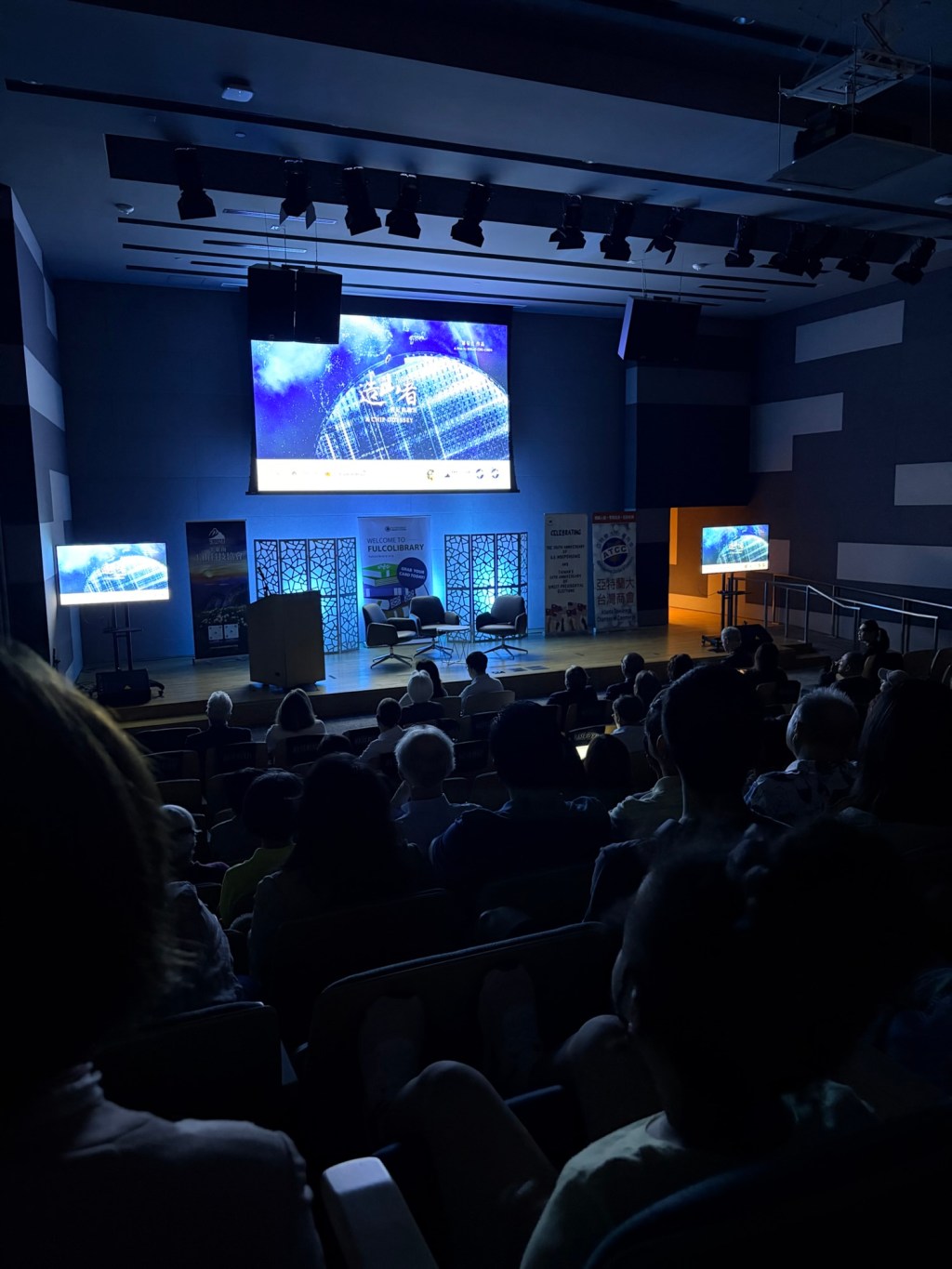
This reality becomes even more visible when looking at the global semiconductor race. Recently, films and documentaries such as Chip Odyssey have highlighted the extraordinary geopolitical importance of Taiwan and companies like TSMC — Taiwan Semiconductor Manufacturing Company. What appears on the surface to be a story about computer chips is actually a story about power, intelligence, infrastructure, and the future of civilization itself.
TSMC’s major advancements fundamentally changed the trajectory of modern computing and accelerated the rise of AI. Their breakthroughs were not simply about making chips smaller. They mastered the manufacturing of semiconductors at scales so advanced that very few organizations on Earth can replicate them. Through innovations in 7nm, 5nm, 3nm, and now emerging 2nm technologies, TSMC enabled chips to become faster, more energy efficient, and exponentially more powerful.
This matters because AI depends on computation, and computation depends on chips.
Every major AI breakthrough rests upon enormous computational infrastructure powered by advanced semiconductors. AI systems like large language models require massive amounts of processing capability to train and operate. Companies like NVIDIA, Apple, AMD, and others design powerful chips, but many rely on TSMC to manufacture them. In many ways, semiconductors have become the hidden nervous system of modern civilization. The significance of this cannot be overstated.
Smartphones, cloud computing, autonomous systems, financial markets, military infrastructure, healthcare systems, and artificial intelligence all depend on these microscopic pieces of silicon. What oil was to the industrial age, semiconductors are becoming to the intelligence age.
This changes the Babel metaphor dramatically.
The original tower was built with bricks reaching physically toward the heavens. Today’s tower is built with silicon reaching cognitively toward intelligence itself.
At the base of this modern tower are rare earth minerals, energy systems, global supply chains, semiconductor fabrication plants, and cloud infrastructure. In the middle are algorithms, machine learning models, data centers, and autonomous systems. At the top are influence, prediction, economic power, military superiority, and increasingly, the ability to shape human perception itself.
The competition is no longer simply about who can build the tallest tower. The competition is now about who controls the intelligence inside the tower.
This is why the semiconductor race has become inseparable from national security and geopolitical strategy. Taiwan is no longer merely an island in the global economy. It has become one of the most strategically important regions in the world because modern civilization depends heavily on its semiconductor manufacturing capacity.
Yet AI introduces another profound layer to this story. The original Babel narrative warned of humanity organizing around concentrated ambition without sufficient wisdom. Today AI creates the possibility of unprecedented concentration: concentrated data, concentrated computation, concentrated surveillance, concentrated influence, and concentrated decision-making power. A small number of corporations and governments may soon possess systems capable of shaping the thoughts, behaviors, and emotional reactions of billions of people through algorithms and predictive systems.
In this sense, the “single language” of the future may not be spoken language at all.
It may be algorithms.
AI systems increasingly influence what people see, what people believe, what people purchase, who they trust, and how they emotionally respond to the world around them. This represents a form of psychological and informational power unlike anything humanity has previously encountered.
At the same time, AI is beginning to influence semiconductor development itself. Artificial intelligence is now being used to optimize chip layouts, improve manufacturing efficiency, predict defects, automate portions of design, and accelerate materials research. This creates a powerful feedback loop: better chips create better AI, and better AI helps create better chips.
The cycle compounds itself.
The semiconductor industry and AI industry are no longer separate ecosystems. They are merging into one interconnected intelligence infrastructure.
This is why the AI era feels spiritually and psychologically significant. Humanity is not simply building better machines. Humanity is building systems that increasingly mirror human cognition itself — systems capable of language generation, prediction, reasoning, optimization, and decision-making.
The deeper question beneath the semiconductor race may therefore be this:
Will AI become an extension of humanity’s highest values, or an amplifier of humanity’s unresolved shadows?
Because technology evolves rapidly, but human wisdom evolves slowly.
That may be the real danger.
The greatest risk of AI may not be artificial intelligence itself, but amplified human immaturity operating at planetary scale. AI magnifies intent. A wise civilization could use these tools to cure disease, democratize education, reduce suffering, optimize sustainability, and foster collaboration across nations. An unwise civilization could use the same tools for surveillance, manipulation, economic displacement, autonomous warfare, engineered division, and social control.
The faster technology evolves, the more people search for mindfulness, embodiment, nervous system regulation, spirituality, emotional intelligence, and meaning. Information abundance does not satisfy the human spirit. Optimization alone cannot heal emptiness.
AI can generate content endlessly, but it cannot tell a person why their life matters. It can simulate conversation, but simulation is not human presence. It can analyze emotion, but analysis is not love.
This may explain why coaching, therapy, yoga, mindfulness, leadership development, and healing-centered professions are becoming increasingly important in the AI era. As machines become more capable, humanity becomes more responsible for protecting what is deeply human.
In the industrial age, value came from physical labor. In the information age, value came from knowledge. In the AI age, knowledge itself becomes increasingly abundant and automated. This shifts the value of human contribution toward something different: discernment, emotional intelligence, ethical judgment, adaptability, wisdom, creativity, and trust.
The future may belong less to those who simply know the most information and more to those who know how to create meaning, build relationships, regulate emotion, navigate ambiguity, and lead human beings through complexity.
Ironically, AI may force humanity to rediscover humanity.
Perhaps AI does not destroy Babel. Perhaps it reveals its true nature. The story was never simply about different languages. It was about what happens when humanity gains power faster than wisdom.
Today we stand before another tower — a digital tower, an intelligent tower, a global tower built not from bricks, but from silicon, algorithms, computation, and human ambition.
And once again, the question is not simply: “Can we build the tower?” The question is, “What kind of people are we becoming while we build it?”





 The Launch Table